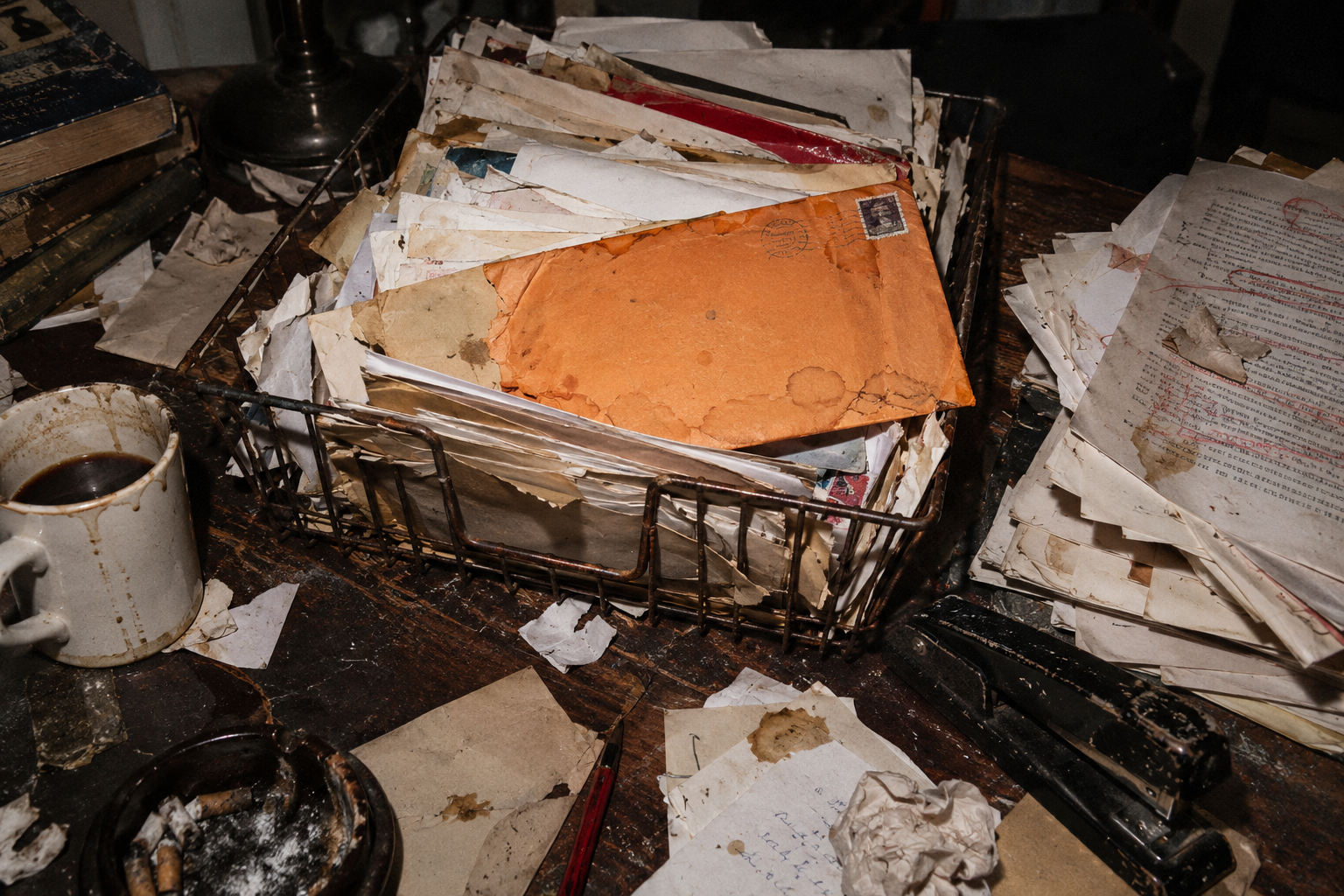
I finished the job. Apparently I still work here.
You sent the handover. Something in the walls is still asking you to update the opening hours.

I sent the handover, closed the job and tried to leave. The client kept asking me to update the opening hours.
Three months after launch, the website materialises in your inbox holding a broken opening hours widget. You built the house. Apparently you also live in the boiler. Nobody decided who would look after the website. A folder was handed over. Everyone said something warm about working together, then scattered into the woods.
Now the old project returns whenever it needs feeding. A photograph wants changing. An account has lost its password. A third party feature has stopped doing the thing everyone assumed it would do forever. Each message arrives with the ceremonial greeting: Trust me this is a quick one.
A folder can arrive safely without anybody accepting the job it contains. That conversation is easy to skip while everybody is trying to get the launch out of their bloodstream.
Before closing the project, identify the person who will handle routine content changes and the person who can deal with a technical problem. They might be the same person. They might be an outside support provider. The useful bit is that they know they have the job.
Walk through an ordinary task with them. Have them make a harmless change in the appropriate test environment and find the instructions again without your help. If they cannot locate the login or tell which version is live, the handover needs another pass. A screen recording of you doing everything at supernatural speed is not evidence that they can do it.
Write down where support requests go. Be clear about what any agreed support period covers and how new work gets discussed. This can be plain language. It does not need to read like an exorcism performed by a procurement department.
Do not pull the plug to prove a point
Check account ownership and access as part of the handover. Confirm that the responsible people can sign in and recover their accounts before your own access changes. Keep passwords out of casual email threads. If the site relies on a service billed to you, make that dependency visible and agree how it will be handled.
The goal is an orderly exit, not a dramatic demonstration of how much breaks when you disappear.
When a request arrives later, establish what has happened before accepting the work. Is something you agreed to provide failing? Is the client asking for a new feature? Is the issue with an outside service? Those lead to different conversations. Trust me this is a quick one is not yet a useful description of the job.
For a new request, an example reply could be: I can review this on Thursday. Send the page address and what you expected to happen, and I will confirm the work and cost before changing anything.
That is still helpful. It also leaves room for the rest of your calendar to exist.
The ghost may knock again. It does not need its own key.